Beyond Words: Why Book Illustrations Matter

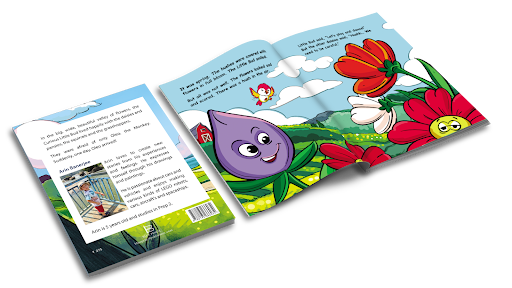
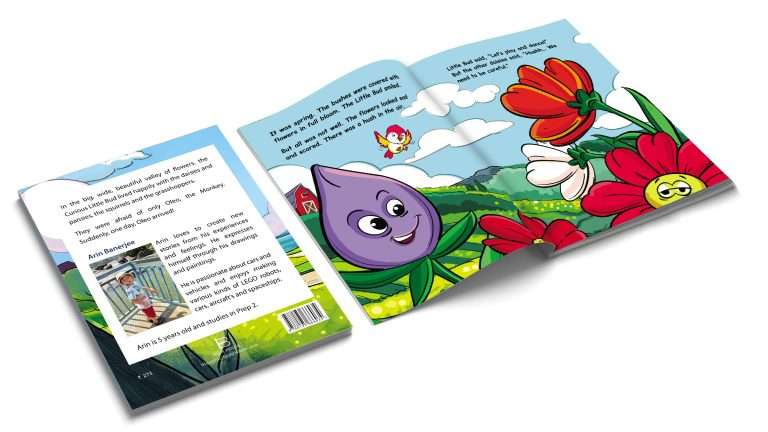
The Curious Little Bud by Arin Banerjee
The Curious Little Bud by 5-year-old Arin Banerjee

By Abhimanshu

Pictures do tell a story of their own! You may be familiar with the age-old adage, “A picture is worth a thousand words.” Regardless of language, one glance at an illustration can often reveal where a story is headed.

Illustrations were one of the earliest forms of human communication. Before the advent of language, our ancestors used pictures to convey ideas and stories. Engravings etched into stones told tales of their own, serving to preserve history and share stories with future generations.

It’s fascinating to note that these illustrations were, in fact, the first written language of ancient societies. Instead of relying on letters and words, people worldwide used symbols and pictures to communicate memories, beliefs, and stories.

The Union of Illustration and Words

The written word has always been considered the primary source of knowledge. However, over the years, writers began to understand the power of illustration. They strived to enhance their works by incorporating striking graphics to captivate readers. This union of words and imagery created a new dimension to storytelling, which continues to captivate audiences.

It’s no secret that adding graphics to text can do wonders in capturing a reader’s attention. Whether you’re a grown-up or a kid, visual aids help you to imagine and understand the story better. Today, a work of art properly balances illustration and words. And rightly so. 

This is where the role of professional book illustration becomes invaluable, as it bridges imagination with reality for readers of all ages.

Vivid illustrations spark imagination and bring stories to life for children.

Illustrations are like magic spells for the little ones that bring the tale to life. Even before they know how to read, a colourful picture can take them on an adventure and help them understand the story’s events.

According to Jean Piaget’s Cognitive Constructivism theory, a child’s cognitive growth can be classified into four distinct stages: Sensorimotor, Preoperational, Concrete, and Formal Operational.

During the Preoperational phase (typically occurring between the ages of 2 to 7), children learn to comprehend the world by utilizing words and pictures. Children can better understand their culture and identity if we successfully introduce high-quality illustrations during this stage.

Illustrations in children’s books also serve another crucial purpose, i.e., capturing the child’s attention and motivating them to read. Incorporating comic and humorous images instils a love for books in the child, encouraging them to explore new worlds and indulge in their imagination.

High-quality children’s book illustrations not only entertain but also support early learning, helping kids connect words with images and concepts.

Who can resist falling in love with a book that features a charming and lovable character? Including illustrations of delightful characters can cultivate a sense of attachment and endearment towards the book and its characters.

Book illustrations bring stories to life
Bringing stories to life beyond the written word.

Gorgeous and meaningful illustrations are important for all kinds of works. 

For instance, take George Elliot’s realistic novel, “The Mill on the Floss“. An illustration depicting Tom and Maggie Tulliver walking together against a dingy backdrop, carrying a basket, sets the tone for the story. The way Tom looks at his sister Maggie in the image conveys that he would go to any extent to protect her. The picture also gives us a glimpse into the turbulent lives of a lower-middle-class family, helping us imagine the story more vividly.

Similarly, Lewis Carroll’s “Alice in Wonderland ” was a captivating fantasy fiction work with gorgeous illustrations accompanying a beautifully told tale. Pictures are essential in telling the story, setting the book’s tone, and making the words come to life in our imagination.

For poets and authors, poetry illustrations can enrich the reading experience, offering readers a visual representation of emotions and themes that words alone may not capture.

These are just a few examples of beautiful literature embellished by artistic imagery that often rejuvenates our imagination.

Character illustrations add depth and personality to fiction and poetry books.

Create Your Visual Masterpiece

Embarking on the journey of illustrating a poem, novel, or children’s book may bring joy, but it is no simple feat. Yet fear not, for the impossible is merely a challenge waiting to be conquered. So here are some steps to help you get started.

Step 1: Determine the mood you want to create with your illustrations

Step 2: Choose the art or medium you wish to use

Step 3: Experiment with different colours, styles, and shapes to find what works best for your vision

Step 4: Create thumbnail sketches to work out your ideas before creating the final illustrations.

Step 5: Compile your pictures into a collection using clear plastic sleeves. Viola, your images are ready!

Things to Remember While Creating Your Masterpiece

Be bold and take creative liberties with your illustrations. Sometimes the best art comes from thinking outside the box!

Show your illustrations to friends and family to get their feedback. They may have ideas that you haven’t thought of, or they may notice something that needs improvement.

Have fun! Creating illustrations is a great way to express your creativity and bring your imagination to life.

The Magic Towel by Krrish Mishra
The Magic Towel by 8-year-old Krrish Mishra

Remember, even if your illustrations don’t turn out exactly as you envisioned, they are still a unique and valuable expression of your artistry. So don’t be too hard on yourself, and enjoy the process! Your illustrated poetry book may become a best-seller and make you a household name.

Illustrations breathe life into words, transforming simple text into unforgettable storytelling experiences. From children’s books to fiction and poetry, they create a visual language that deepens connection and meaning. 

At Blue Pencil, we offer professional illustration services for books, helping authors and poets craft stunning visuals that perfectly complement their words. Whether you’re creating a children’s adventure, a heartfelt poem, or a literary masterpiece, our illustrators can bring your vision to life.

Partner with us today and let’s create illustrations that make your book unforgettable.

More Must Reads on Blue Pencil

The Benefits of Working with a Professional Remote Editor

The Power of a Good Book Cover Design

The Canine Chronicles | Excerpt in Telekids

AbhimanshuAbhimanshu is a digital content writer with a passion for crafting engaging, informative, and impactful content. With years of experience under his belt, he specializes in creating content that resonates with audiences across various niches and industries.

With a passion for writing, Abhimanshu has earned qualifications in both NET and GATE, cementing his status as a skilled and knowledgeable writer. His literary talents are diverse, with a particular fondness for engaging travel articles, insightful book reviews, and literary criticism across various genres


Self-Editing vs. Professional Editing: Making the Right Choice for Your Manuscript

Self-Editing vs. Professional Editing: Making the Right Choice for Your Manuscript

Every writer faces a crucial decision in their publishing journey: when to rely on self-editing and when to invest in professional editing services. While self-editing is an essential skill for any author, understanding its limitations can help you make informed decisions about your manuscript’s needs. Let’s explore both approaches to help you determine the best path for your work.

The Power of Self-Editing: Essential Skills Every Writer Should Master

Self-editing is your first line of defense against common writing mistakes. Here are proven techniques to strengthen your self-editing process:

The Cooling-Off Period

Give yourself at least two weeks away from your manuscript before editing. This distance helps you approach your work with fresh eyes and spot issues you might have missed while writing.

Read Aloud Method

Reading your work aloud can help you identify awkward phrasing, run-on sentences, and rhythm issues. Your ears often catch what your eyes miss.

The Backward Read

Start from the last sentence and work your way backward. This technique prevents your brain from automatically filling in missing words and helps you focus on individual sentences.

Multiple Passes

Focus on different elements in each editing round:

  • First pass: Overall story structure and flow
  • Second pass: Character development and dialogue
  • Third pass: Grammar and punctuation
  • Fourth pass: Word choice and sentence variety

Understanding the Limitations of Self-Editing

Despite your best efforts, self-editing has inherent limitations that can affect your work’s quality:

Emotional Attachment

Writers often struggle to view their work objectively. That brilliant metaphor you love might actually confuse readers, but you’re too close to see it.

Knowledge Gaps

Even experienced writers can’t match the comprehensive knowledge of grammar, style guides, and industry standards that professional editors possess.

Blind Spots

Our brains naturally fill in gaps and correct errors in our own writing, making it difficult to spot issues that would be obvious to others.

Time and Energy Constraints

Thorough self-editing requires significant time and mental energy. After multiple revisions, fatigue can set in, reducing effectiveness.

When Professional Editing Becomes Crucial

Certain situations demand professional editing services. Here’s when you should seriously consider hiring a professional editor:

Publication Goals

If you’re planning to:

  • Submit to traditional publishers
  • Self-publish professionally
  • Enter writing competitions Professional editing can give you the competitive edge needed to succeed.

Complex Projects

Professional editing is essential for:

  • Academic works requiring specific style guides
  • Technical manuscripts with specialized terminology
  • Books targeting international markets
  • Works requiring fact-checking and reference verification

Genre-Specific Requirements

Some genres have unique demands that benefit from specialized editing:

  • Academic papers requiring adherence to specific citation styles
  • Children’s books needing age-appropriate language
  • Technical manuals requiring precise terminology
  • Literary fiction demanding sophisticated language analysis

The Professional Advantage

Professional editors bring several crucial benefits to your project:

Industry Insight

Professional editors understand current market trends and publisher requirements, helping align your work with industry standards.

Objective Perspective

They provide unbiased feedback about your work’s strengths and weaknesses, helping you make informed revision decisions.

Technical Expertise

Professional editors ensure consistent style, proper formatting, and adherence to genre conventions.

Quality Assurance

They catch errors that automated tools and self-editing miss, from subtle grammatical issues to plot inconsistencies.

Making the Right Choice

The best approach often combines both methods:

  1. Begin with thorough self-editing to clean up obvious issues
  2. Use professional editing services to polish your work to publishing standards
  3. Return to self-editing for final reviews of the edited manuscript

Next Steps

At Blue Pencil, we understand the importance of both self-editing and professional editing. While we encourage authors to develop strong self-editing skills, we’re here to provide the professional expertise your manuscript needs to reach its full potential.

Ready to take your manuscript to the next level? Contact us today for a free consultation to discuss your manuscript’s editing needs. Our experienced editors can help you determine the level of editing required to achieve your publishing goals.

The Power of a Good Book Cover Design

In the world of publishing, they say, “Don’t judge a book by its cover.” However, the reality is that a book cover plays a crucial role in attracting potential readers. A well-designed cover can significantly impact sales and reader engagement. Let’s delve into the benefits of a good book cover design and how it can make a difference.

Shyam - A Star Forgotten
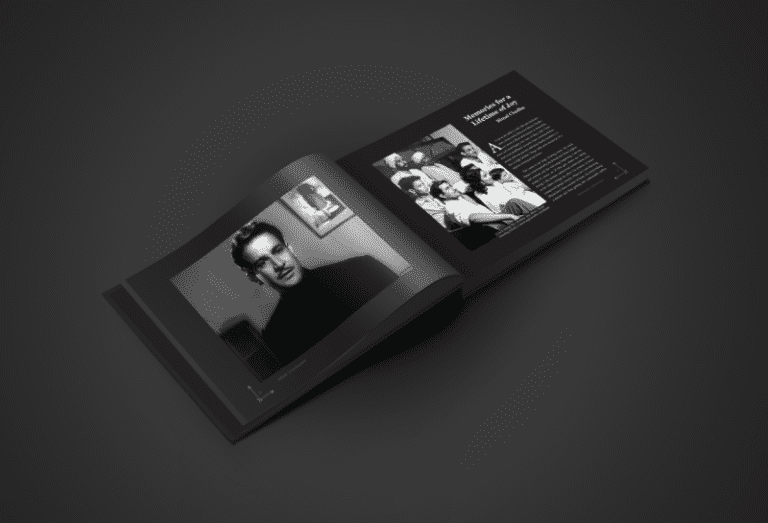
A beautifully illuminated photo with Crystal UV printing on title on velvet paper in Shyam – A Star Forgotten (Coffee Table – Hardbound)


Impact on Sales and Reader Engagement

A book cover is the first thing a potential reader sees, whether they’re browsing a bookstore or scrolling through an online platform. It’s a visual representation of the story inside and can pique a reader’s interest. A compelling cover can:

  1. Attract Attention: An eye-catching design stands out among thousands of books, drawing potential readers to pick it up or click on it for more details.
  2. Convey the Genre and Theme: A good cover gives a glimpse of the book’s genre and theme, helping readers to quickly identify if it aligns with their interests.
  3. Create an Emotional Connection: A well-designed cover can evoke emotions, enticing readers to explore the story further.

Director's Chair - Hindi Cinema's Golden Age
Photographs on blue background for a biographical book cover Director’s Chair – Hindi Cinema’s Golden Age

The Role of Colour in Book Cover Design

Colour is a powerful tool in cover design. It can set the mood, convey emotions, and hint at the book’s theme. For instance, a romance novel might use warm tones like red or pink, while a thriller might opt for darker shades. Here are some general associations between colours and themes:

  • Red: Often used in romance or thriller genres, it signifies passion, love, or danger.
  • Blue: Commonly used in business, biographies or self-help books, it conveys trust and wisdom.
  • Green: Typically found in nature or environmental books, it represents growth and harmony.
  • Black: Used in mystery or horror genres, it symbolizes power or fear.
  • Yellow: Often seen in children’s books, it signifies happiness and energy.

Remember, these are just general associations. The right colour palette can draw in the target audience and set the right expectations about the book’s content.

THE IPL QUIZ BOOK - Updated till 2023
A powerful action photo of MS Dhoni in THE IPL QUIZ BOOK – Updated till 2023

Digital Art and Custom Illustrations

With advancements in technology, digital art and custom illustrations have become popular in book cover design. They offer endless possibilities for creativity and uniqueness. Digital art allows for intricate designs and effects that might be difficult to achieve with traditional methods. Custom illustrations, on the other hand, can give a book a distinctive look, making it stand out in a crowd.

Book covers can be created using digital art, hand-sketched drawings, or photographs. Each has its unique appeal:

  • Digital Art: This method allows for a wide range of styles and effects. It’s versatile and easily editable. With the advent of AI, digital art has become more sophisticated, capable of creating intricate designs that were once only possible by hand.
  • Hand-Sketched Drawings: These offer a personal touch and can convey a sense of authenticity and nostalgia. They’re often used for children’s books, literary fiction, and memoirs.
  • Photographs: These can provide a realistic or modern look. They’re commonly used for non-fiction, biographies, and contemporary novels.

Each method communicates a different aesthetic and attracts a different reader demographic. The choice depends on the book’s content and target audience.

PRINCESS CHINNI GOES TO SCHOOL FULL COVER
Handsketched drawings in Princess Chinni Goes to School

The Use of AI in Book Cover Design

Artificial Intelligence (AI) is revolutionizing the field of book cover design. AI tools can analyze successful covers in a specific genre and suggest design elements that are likely to attract readers. They can also automate the design process, making it faster and more efficient.

However, human creativity and intuition remain vital in creating a cover that not only looks good but also resonates with potential readers.

The Cinema of Mrinal Sen
A photo of the maverick filmmaker in black and white for The Cinema of Mrinal Sen


A Good Book Cover Makes a Difference

A good book cover design is much more than just a decorative element. It’s a powerful marketing tool that can significantly impact a book’s success. By leveraging colour, digital art, custom illustrations, and AI, authors and publishers can create compelling covers that engage potential readers and boost sales. Remember, a book cover is the first chapter of your story that a reader sees. Make it count!

Unleash Your Story’s Potential with Blue Pencil’s expert cover design team! 📘✨

  • First Impressions Count: Let our expert designers craft a cover that captures the essence of your tale and draws readers in at first glance.
  • Colour Your Narrative: Choose the perfect palette to set the tone and mood of your book, ensuring it speaks volumes before the first page is turned.
  • Artistic Flair: From digital art to hand-sketched illustrations, we provide a range of styles to make your book uniquely yours.
  • AI-Enhanced Creativity: Embrace the future with AI-driven designs that resonate with your audience and stand out in the crowded literary landscape.

Don’t settle for less—make your book cover the first chapter of your success story! Get in touch today! 🌟

Print on Demand Books: The Future of Publishing

print on demand book publishing
Print on Demand is not just a printing method; it’s a revolution in the way we think about publishing.

In a world where technological advancements are reshaping every industry, the field of publishing is not left behind. Print on Demand (POD) has emerged as a game-changer, offering authors and publishers unprecedented flexibility in the digital age.

This innovative approach is transforming the publishing landscape, ushering in a new era of accessibility and efficiency. It’s not just a printing method; it’s a revolution in how we think about publishing.

The Print on Demand benefits for authors are immense. Gone are the days when authors had to navigate the labyrinth of traditional book publishing houses that held a monopoly over the dissemination of literature. It liberates creative minds from the constraints of mainstream gatekeepers, offering a direct avenue for authors to share their stories. Whether you’re a seasoned writer or a fresh voice, POD provides a platform for everyone.

What is Print on Demand?

Print on Demand (POD) is a printing and fulfilment process that enables books to be printed as needed. Unlike traditional publishing, where books are printed in bulk before demand is known, POD allows the creation of individual copies as orders are placed. This dynamic model eliminates the need for large print runs and excessive inventory. In simple words, it can be called on-demand printing of books.

How Print-on-Demand Works in the Book Publishing Industry

Print on Demand services operate on a simple yet powerful premise. When a reader places an order for a book, the printing process is initiated on the POD platform. Advanced digital printing technologies ensure that each copy is produced with the same quality as traditional offset printing. The book is then shipped directly to the customer or the bookstore, cutting down on storage costs and waste associated with overproduction.

The Print-on-Demand publishing market in India has witnessed exponential growth, driven by its adaptability to various publishing needs, with several POD books available today. The market has become a melting pot of creativity, giving a voice to those who have struggled to break through in the traditional publishing arena.

The Traditional Publishing Model

Traditionally, publishing was a lengthy and often exclusive process. Authors would submit manuscripts to publishers, hoping for acceptance into a world where gatekeepers held the keys to literary success. However, this model came with inherent challenges and limitations that hindered the industry’s growth.

Lengthy publishing timelines, limited control over creative decisions, and the struggle to secure a publishing deal were just a few of the challenges. Also, the financial risks associated with large print runs and the pressure to meet sales quotas often left authors and publishers in precarious positions.

The Advantages of Print-on-Demand

Print on Demand presents a paradigm shift in the publishing paradigm, offering a host of advantages over the traditional model.

Cost Reduction and Risk Mitigation 

One of the most significant advantages of POD is the drastic reduction in upfront costs. With traditional publishing, authors, and publishers were required to invest in large print runs, leading to excess inventory and the risk of unsold books. POD eliminates this financial burden by printing only when there is demand, mitigating the risks associated with overproduction.

The Benefits of Print on Demand for Small Publishers & Self-Published Authors 

Print on Demand is a game-changer for self-published authors and small publishing houses. It levels the playing field, providing a cost-effective avenue for publishing without compromising on quality.

Small publishers can experiment with niche genres and cater to specific audiences without the pressure of meeting mass-market demands. Authors can maintain creative control over their work, deciding on cover designs, formatting, and marketing strategies.

The influence of Print on Demand publishing extends beyond cost savings. It revolutionizes the entire publishing process, from inception to distribution. It introduces a streamlined, demand-driven workflow into the publishing world.

POD accelerates the publishing timeline significantly. Manuscripts can be transformed into physical copies within days, not months. This agility allows authors to respond swiftly to market trends and reader demands. Revisions and updates can be implemented seamlessly, keeping content relevant and engaging.

Democratization of the Publishing Industry

Print on Demand democratizes the publishing industry by breaking down the traditional barriers to entry. Authors from diverse backgrounds and experiences now have the opportunity to share their stories without the need for a nod from traditional gatekeepers. This inclusivity fosters a literary landscape reflecting human experiences’ rich tapestry.

Print on Demand is not just a printing technology; it’s a catalyst for change in the publishing industry. The future of publishing is dynamic, accessible, and filled with opportunities for authors and publishers who embrace the flexibility of the digital age.

Navigating the Print-on-Demand Revolution with Blue Pencil Publishers

At Blue Pencil Publishers, we harness the power of POD and offer a suite of services to streamline the publishing process. From editing and formatting to distribution and marketing, we provide comprehensive support tailored to the needs of today’s writers. Check out our end-to-end bespoke & affordable publishing solutions here.

As we bid farewell to the constraints of the past, the horizon looks bright, with Print on Demand Publishing leading the way toward a more inclusive and vibrant literary world.

More Must Reads in Blue Pencil Blog

Why Do You Need a Professional Editor?


Empowering Young Authors: Books by Children & Teens — a Blue Pencil Speciality

Empowering Young Authors: Books by Children & Teens — a Blue Pencil Speciality
The Curious Little Bud by 5-year old Arin Banerjee

Give children toys that are powered by their imagination, not by batteries”—H. Jackson Brown

Children’s untamed and wonder-filled minds possess a remarkable and valuable gift, i.e., the gift of imagination. When given proper care and encouragement, their bubbling creativity can be transformed into a mighty instrument that shapes the future of our world.

Each child has the potential to perform unfathomable tasks that will build a better society if provided with the appropriate opportunities.

However, in our modern era, the boundless potential of children is often overshadowed by the all-consuming presence of technology. Mobile phones, PC, TV, PlayStation, Xbox, etc. have taken hold of the younger generation’s attention, leaving little room for the organic development of their imaginative faculties.

As conscientious grown-ups, we may wonder: what action should we take? Is there anything we can do to help the situation? Well, don’t you worry! Blue Pencil has brought the right solution to your doorstep — Books for Kids by Kids!

The Magic Towel by 8-year-old Krrish Mishra

Our “Young Authors” initiative provides a gateway for children to unleash their boundless imaginations and explore the limitless possibilities of their minds. It is a platform where their creative musings can run wild and free, unrestricted by the limitations of technology.

Understand Children’s Interests

The most authentic and relatable tales often spring forth from the pens of the young ones, reflecting their unique perspectives and passions.

Yet, to cultivate their creative capabilities and hone their craft, we must first ignite a spark of excitement and enthusiasm for writing within their hearts.

Here at Blue Pencil, we foster an atmosphere that inspires them to put pen to paper, fuelled by collaborative efforts that align with their interests. This approach encourages their creative impulses to flourish and flourish, resulting in written works that are creative and captivating.

PRINCESS CHINNI GOES TO SCHOOL FULL COVER
Princess Chinni Goes to School by 12-year-old Isabella Dipesh

Refine the Writing Skills of Young Authors 

We aim to guide the kids to view writing as a thrilling pursuit, not a dull and dreaded task. With a team of renowned authors having impeccable backgrounds in English Creative Writing, we enable kids to realize their full potential.

We also encourage children to write by assisting them with the essential guidance and tools to polish their writing skills. The in-house editorial team provides proper editorial support with the structure, development of the various characters, and proofreading.

WERE WONDERS fantasy fiction
Were Wonders by 16-year-old Trishna Saha

Create Books That Resonate with Children

Books written by kids for kids can have a more significant influence on the younger generation.

By motivating kid authors to write books on children, Blue Pencil aims to create quality books that little readers can relate to more than books written by adult authors on children. After all, kids appreciate the nuances of their age group better than adults.

My Unicorn is a Dove by 10-year-old Sharanya Banerjee

Welcome Creative Inputs from Kid Authors

Kids should feel involved and engaged in their creative endeavours. Thus, once the manuscript is all set for illustrations, we encourage creative inputs from the kid authors. This collaborative process makes them feel an active part of the entire project and enhances their creativity further.

What We Offer

Blue Pencil is committed to offering 360-degree editorial support for all writing projects. We offer our young writers the proper support and guidance to publish books that echo more with children and encourage them to read and write more.

We appreciate the creative inputs of our little authors to ensure that the writing process is exciting and fun for them. We are proud and thrilled to have a growing list of young authors who have enticed thousands of young readers through their impeccable writing skills and creativity.

More Must Reads on Blue Pencil

Why Do You Need a Professional Editor?

The Canine Chronicles | Excerpt in Telekids

Self-publish your Book, Reach Your Readers and Gain Access to a World of Infinite Possibilities


AbhimanshuAbhimanshu is a digital content writer with a passion for crafting engaging, informative, and impactful content. With years of experience under his belt, he specializes in creating content that resonates with audiences across various niches and industries.
With a passion for writing, Abhimanshu has earned qualifications in both NET and GATE, cementing his status as a skilled and knowledgeable writer. His literary talents are diverse, with a particular fondness for engaging travel articles, insightful book reviews, and literary criticism across various genres.

Blue Pencil’s Books at Dhaka Lit Fest 2023

A great moment of pride for all of us at Blue Pencil!
Our books are showcased at the world-famous Dhaka Lit Fest 2023, thanks to The University Press Limited (UPL).
Friends in Dhaka, do drop in at the UPL Stall – January 5-8, 2023.

Blue Pencil books at Dhaka Lit Fest 2023

The Blue Pencil books available for sale at the UPL stall are:

Reflections & Stray Thoughts

Incomparable Sachin Dev Burman

Majrooh Sultanpuri: The Poet For All Reasons

The Unforgettable Music of Hemant Kumar

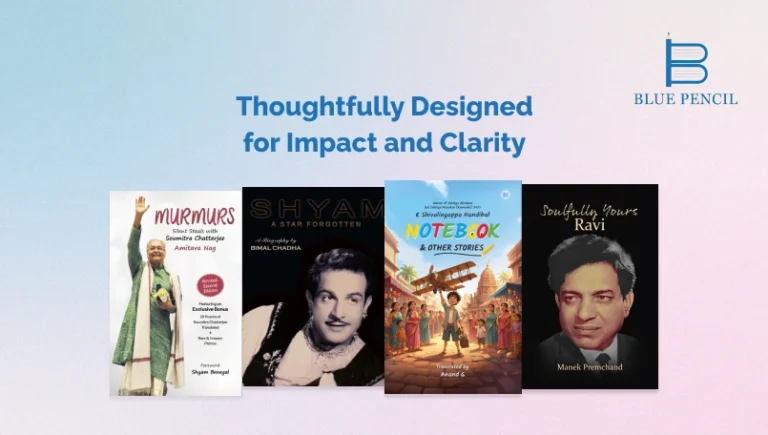
Murmurs: Silent Steals with Soumitra Chatterjee

Don’t forget to visit the vibrant celebration of literature and arts at the Dhaka Lit Fest 2023! It’s happening now at:
Bangla Academy
Suhrawardy Udyan Road,
Dhaka Bangladesh

Self-publish your Book, Reach Your Readers and Gain Access to a World of Infinite Possibilities

As the legendary author, poet, essayist and mentor Maya Angelou had said many years back, ‘There is no greater agony than bearing an untold story within you’, any writer or storyteller worth his or her salt might know that the creative process of penning a book is nonetheless arduous than giving birth to a biological baby. But if it is a universal truth in terms of writing those untold stories, it is all the more important to get the book out for the readers for whom it was written in the first place.

Self Publish Your Book & Gain Infinite Possibilities

As the legendary author, poet, essayist and mentor Maya Angelou had said many years back, ‘There is no greater agony than bearing an untold story within you’, any writer or storyteller worth his or her salt might know that the creative process of penning a book is nonetheless arduous than giving birth to a biological baby. But if it is a universal truth in terms of writing those untold stories, it is all the more important to get the book out for the readers for whom it was written in the first place.

What are the earliest thoughts that occur in the context of writing and publishing your own book?

Imagine the earlier days, when online retailers like Amazon, Kobo or iTunes were nowhere in existence, opening up new horizons of online publishing and distribution. Imagine the times when the process of pitching your book baby to major book publishing companies, the prime gatekeepers of the industry used to be a painful journey of sending out sample chapters and proposals one after the other, resulting in negation and despair. Many times, the dreams of aspiring authors to get their books out in print were nipped in the bud rather mercilessly, as the rejection letters by the publishers kept pouring in after a never-ending wait.

Many authors those days were plagued by the thoughts of inadequacy and self-pity as the book ideas were rejected as not enough lucrative, not enough worthy of the marketplace. Sylvia Plath, the phenomenal American confessional poet, the Pulitzer-prize winner whose books are widely read and translated in various languages all over the world now had once written about the phase of her repeated rejections of her manuscripts of poems: “Nothing stinks like a pile of unpublished writing, which remark I guess shows I still don’t have a pure motive about writing…” In fact, history is also witnessed too many timeless classics which faced repeated rejections, and finally were ritualized in print, resulting in widespread readership over the course of time.

The World of Amazon and Self-publishing:

Today, on the one hand, there is still this insistent hierarchy of literary agents pitching your books to the top five or ten publishers and a cumbersome process of waiting and trying your luck. On the other hand, there is a whole new world of freedom and possibilities with the advent of Amazon, Kobo, and other online book distribution channels which has made self-publishing for authors a lot easier, hassle-free, and less time-consuming like never before.

The flurry of self-publishing companies and self-published authors gained momentum with the advent of Amazon KDP (Kindle Direct Publishing) in November 2007, concurrently with the first Amazon Kindle device. Over the course of time, Kindle Direct Publishing, used simultaneously by self-published authors and self-publishing companies became a great game-changer and resulted in the emergence of many versatile authors with out-of-the-box themes and content for their books who wanted worldwide readership in a fast, effective way and also while gaining full control over the sales of their books.

With the tools of technology, Amazon KDP enabled authors and publishers to independently publish their books directly to the Kindle Store. However, the hunger to self-publish print books remained a reality, hence in 2016, Amazon came up with their paperback services, using the benefits of print-on-demand technology that offered both digital and print editions (e-books and paperbacks) to book publishing companies and self-published authors, using the same platform in an economic way that appealed to many.

Over the years, the ordeal of the publishing world has resulted in the death of many a book, while a lot of bad books have also been buried in the sands of time. But we must acknowledge that many self-published authors today have earned readers through good content, proactive marketing in the digital media, and as a result, are getting lucrative deals with major publishing houses in the long run.

Neal Pollack, in his New York Times article titled ‘The Case of Self-Publishing’, cites the recent examples of the famous thriller author Barry Eisler backing out of a half-a-million-dollar dream book deal with St. Martin’s Press, deciding to be the bestseller author that he is, with self-publishing his book.

Amanda Hocking, another bestselling author of 9 e-books, recently stated that she was tired of answering emails of publishers and just wanted to focus on writing.

Many authors in Indian writing in English, and also diaspora writers are considering self-publishing or have already successfully self-published their books and reached a huge number of their target readers, leveraging the benefits of online distribution through Amazon, Kobo, Barnes and Noble, and other major players. Some others, like the bestselling author Neil De Silva, started out with gaining considerable readership through his self-published books and are now getting major deals with big publishers like Rupa & Co. Hence, it can be argued that today, self-publishing crackles with myriad possibilities which were never conceived before.

self publish your book
Turn your dream manuscript into a printed book and ebook

Among the major self-publishing platforms that support authors from India, these are some to consider:

Amazon KDP: E-books from indie publishers and authors (which lets you earn 70% royalty on sales to customers in the US, Canada, UK, Germany, India, France, Italy, Spain, Japan, Brazil, Mexico, Australia, and more)

Print and Read: Blue Pencil’s print-on-demand services for print books and ebooks. You can purchase additional services like editing, formatting, book cover designing and custom illustrations. Print and Read also enables extended online distribution through Amazon India and Amazon Worldwide as well as Flipkart.

Smashwords: One of the leading distributors of indie e-books offering digital publishing and distribution to most of the world’s largest e-book retailers and libraries.

Pothi.com: One of the most popular self-publishing services in India for print books, with additional services like editing, formatting, book cover designing, and also e-book conversion. Pothi also enables extended online distribution through Amazon.in and Flipkart.

With all these resources at your fingertips, publishing your own book has been truly an easy, rewarding experience. You never know, it might be a harbinger of the revolution!