
The Golden Era of Hindi film music gave us an extraordinary collection of songs. Some songs become part of a film’s identity. Others become part of our personal memories, accompanying us through different stages of life. Then there are songs that seem to belong to generations of listeners, staying relevant long after the films they appeared in have faded from popular conversation.
Behind these enduring melodies were composers with distinctive musical styles, lyricists who brought poetry to cinema, singers whose voices became instantly recognisable, and creative collaborations that shaped the sound of Indian popular music.
For readers who want to understand this legacy beyond familiar favourites, books on the Golden Era of Hindi music offer a chance to explore the stories behind the songs and the people who created them.
Broadly associated with the period from the 1940s through the 1960s, the Golden Era of Hindi film music witnessed remarkable experimentation and creativity. Classical influences, folk traditions, poetic expression, and evolving musical arrangements came together to create songs that still attract listeners today.
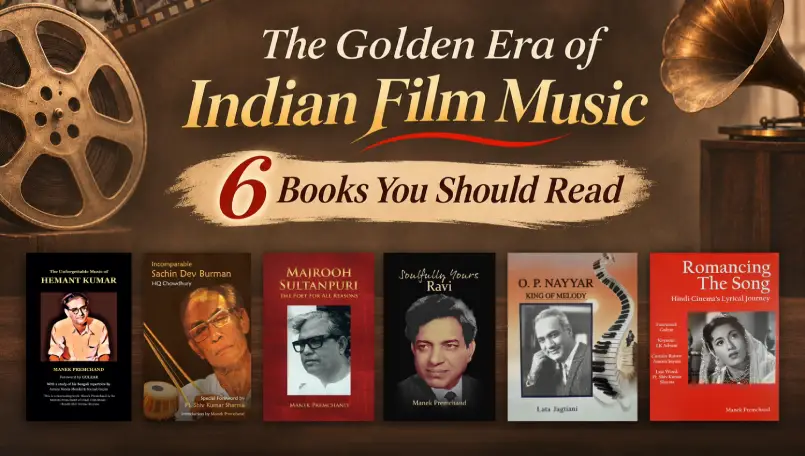
If you are looking for books on Golden Era Hindi film music, here are six titles that explore different aspects of this remarkable musical heritage, from the lives of legendary composers and lyricists to the evolution of the Hindi film song itself.
A note for readers: This is by no means a comprehensive list of books on the Golden Era of Hindi music. The body of work devoted to Indian film music, its creators and its history is vast, and many other authors and books deserve recognition. The six titles featured here represent a small, carefully selected portion of that larger body of work. They offer different perspectives on the people, music, and creative traditions that shaped Hindi cinema.
1. Incomparable Sachin Dev Burman by HQ Chowdhury
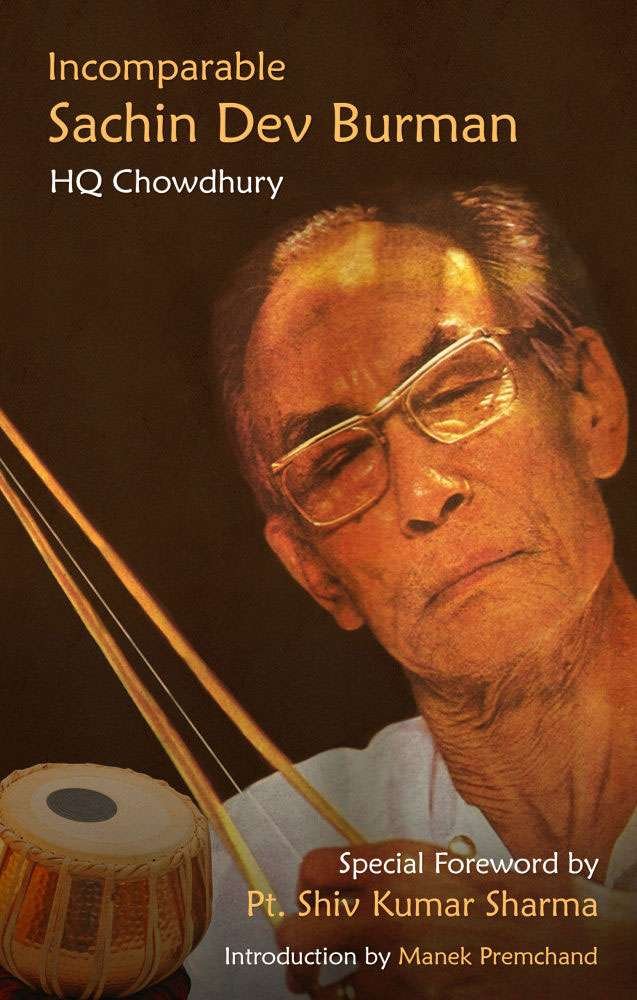
Sachin Dev Burman, popularly known as SD Burman or Burman Dada, occupies a distinctive place in the history of Indian film music. His compositions drew on a rich musical vocabulary that included Bengali folk traditions, classical influences, and other regional forms, giving his music a character listeners still recognise.
Incomparable Sachin Dev Burman by HQ Chowdhury explores the life and musical journey of this celebrated composer and singer. The book traces his early years, musical influences, and eventual rise in the Hindi film industry, where he created an extraordinary body of work.
Understanding SD Burman’s music also means looking at the creative relationships that shaped it. His collaborations with lyricists, singers and musicians produced songs that remain among the most memorable in Hindi cinema. The book examines his career and contribution within this wider musical landscape.
For readers interested in the history of Hindi film music, this biography offers a way to appreciate the person behind the melodies and understand the musical sensibilities that informed his compositions.
Why read it? If you enjoy discovering the stories behind classic Hindi film songs, this book lets you explore the life and creative legacy of one of the era’s most influential composers.
Book: Incomparable Sachin Dev Burman
Author: HQ Chowdhury
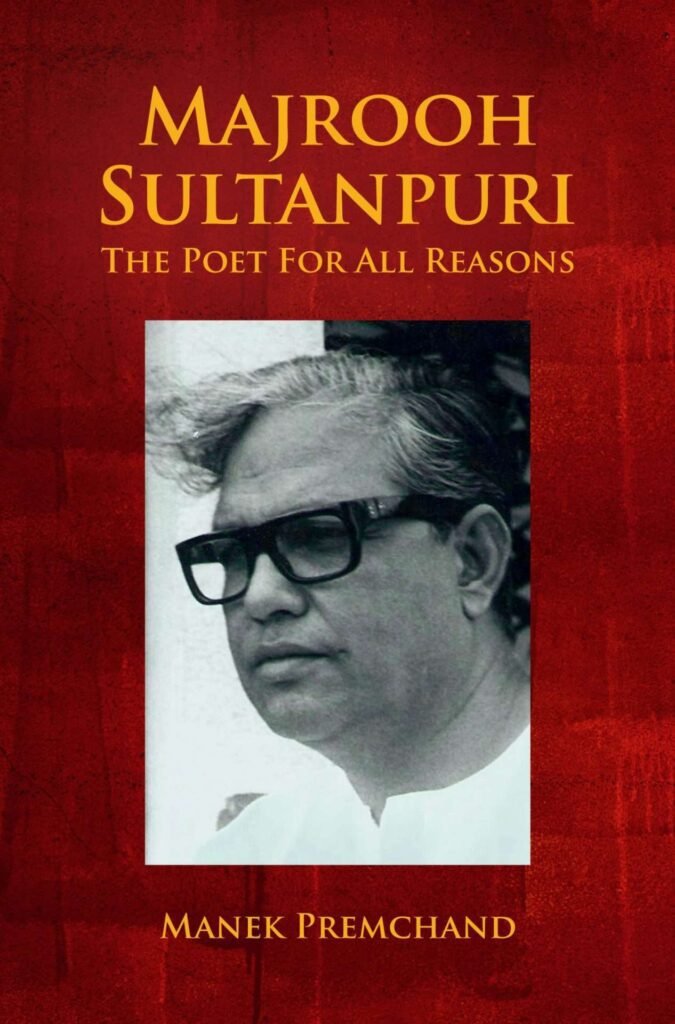
2. Majrooh Sultanpuri: The Poet For All Reasons by Manek Premchand
Hindi film music owes much of its enduring appeal to the words that accompany its melodies. The finest songs often combine memorable compositions, expressive singing, and lyrics that capture an emotion or tell a story in just a few lines.
Majrooh Sultanpuri was one of Hindi cinema’s most prolific and influential lyricists. His writing spanned romantic songs, ghazals, qawwalis, philosophical reflections and lyrics shaped by the situations and characters of individual films.
In Majrooh Sultanpuri: The Poet For All Reasons, film music historian Manek Premchand explores the lyricist’s life and extensive body of work. The book examines his contributions to cinema alongside his literary work, exploring poetic forms such as ghazal, nazm, rubaayi, and free verse.
It also explores the range of musical collaborations that brought Majrooh’s words to life. His work with different composers demonstrates how a lyricist could adapt his writing to varied musical styles while retaining a recognisable poetic sensibility.
For readers searching for books on old Hindi film songs, this title offers a chance to look beyond familiar melodies and appreciate the language, imagery, and literary craft that made them memorable.
Why read it? This book is especially valuable for readers who want to understand the poetry of Hindi film songs and the lyricists’ contribution to Indian cinema’s musical history.
Book: Majrooh Sultanpuri: The Poet For All Reasons
Author: Manek Premchand
3. O. P. Nayyar: King of Melody by Lata Jagtiani

O. P. Nayyar developed a musical identity that was instantly recognisable. His energetic rhythms, distinctive arrangements and memorable melodies gave his compositions a character of their own, making him one of the most distinctive composers associated with Hindi cinema in the 1950s and 1960s.
Yet his musical legacy is sometimes reduced to a particular rhythmic style. O. P. Nayyar: King of Melody by Lata Jagtiani looks beyond that familiar perception to explore the composer’s versatility and the breadth of his work.
The book examines songs such as Zulf Ki Chhaon Mein, Bekasi Had Se, Boojh Mera Kya Naao Re, Aap Ke Haseen Rukh Pe, Aana Hai To Aa and Chain Se Humko Kabhi. By discussing these compositions under different themes, it presents a wider view of Nayyar’s musical range.
It also considers the contributions of lyricists, singers, actors and musical instruments to his work. The book includes the full lyrics of more than 135 songs and brings together perspectives from 17 friends, singers, fans and writers, offering readers several ways to engage with the composer’s legacy.
For anyone exploring books on Golden Era Hindi film music, this title offers a chance to revisit a celebrated composer through a closer look at his songs and creative choices.
Why read it? If you admire O. P. Nayyar’s music and want to explore the range of his compositions, this book encourages you to listen beyond his most familiar rhythmic signatures.
Book: O. P. Nayyar: King of Melody
Author: Lata Jagtiani
4. Soulfully Yours, Ravi by Manek Premchand
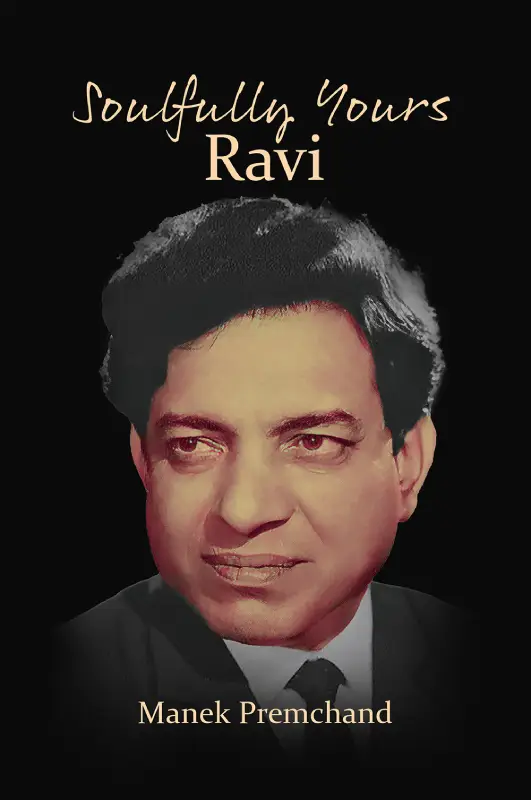
Some composers are best remembered for a handful of celebrated songs, but their full contribution becomes clear when we explore their careers more closely. Ravi belongs among the composers whose work merits such a closer look.
Soulfully Yours, Ravi by Manek Premchand explores the life and musical journey of Ravi, whose compositions form an important part of Hindi film music history. The book lets readers look beyond individual hits and consider the composer and the body of work behind them.
Ravi’s music is part of a wider history of Hindi cinema, in which composers developed individual styles while working with singers, lyricists, filmmakers, and musicians. Exploring his career provides another perspective on the variety of musical approaches that flourished during the Golden Era.
Why read it? This is a useful addition to any reading list for anyone interested in exploring the composers behind the songs and learning more about the creative figures who shaped Hindi cinema’s musical heritage.
Book: Soulfully Yours, Ravi
Author: Manek Premchand
5. The Unforgettable Music of Hemant Kumar by Manek Premchand with Antara Nanda Mondal and Sounak Gupta
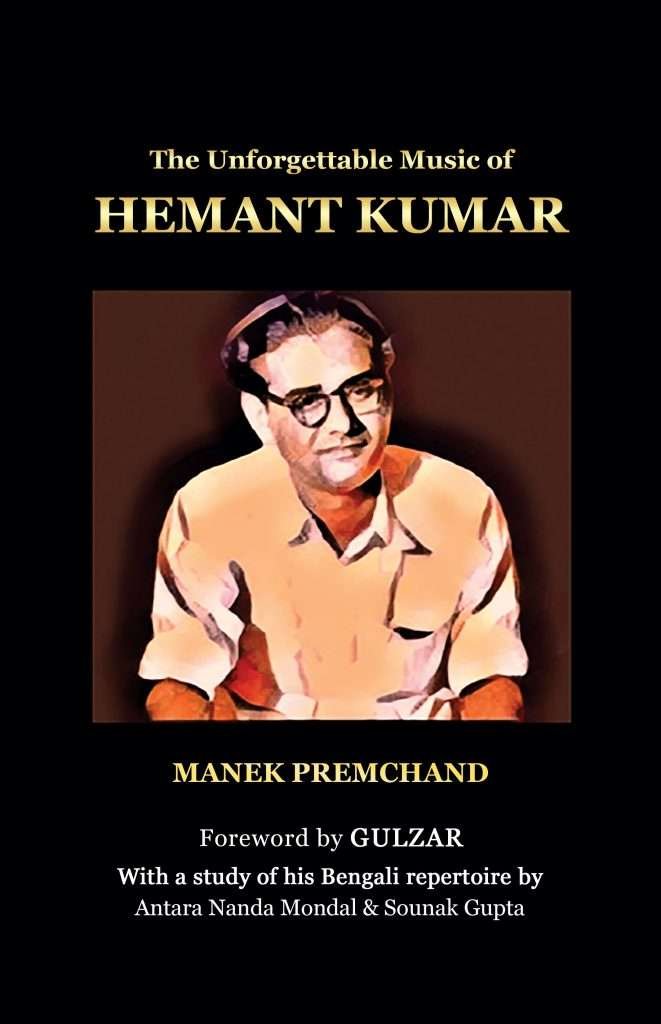
Hemant Kumar’s contribution to Indian music spans several identities: singer, composer, and a key presence in both Hindi and Bengali music.
The Unforgettable Music of Hemant Kumar explores these different facets of his musical career. The book follows his journey from Varanasi to Calcutta and Bombay and back to Calcutta, while examining his work as both a singer and composer.
It looks at his distinctive baritone voice, his compositions, his use of classical raags, the instruments associated with his music and his collaborations with singers and lyricists. The book also explores his connection with Rabindra Sangeet and includes a study of his Bengali repertoire by Antara Nanda Mondal and Sounak Gupta.
A foreword by Gulzar adds another perspective to this exploration of Hemant Kumar’s musical legacy.
For readers interested in books about Hindi film music, this is especially valuable because it places Hemant Kumar within the wider musical landscape rather than examining only his Hindi cinema work.
Book: The Unforgettable Music of Hemant Kumar
Authors: Manek Premchand
6. Romancing The Song by Manek Premchand
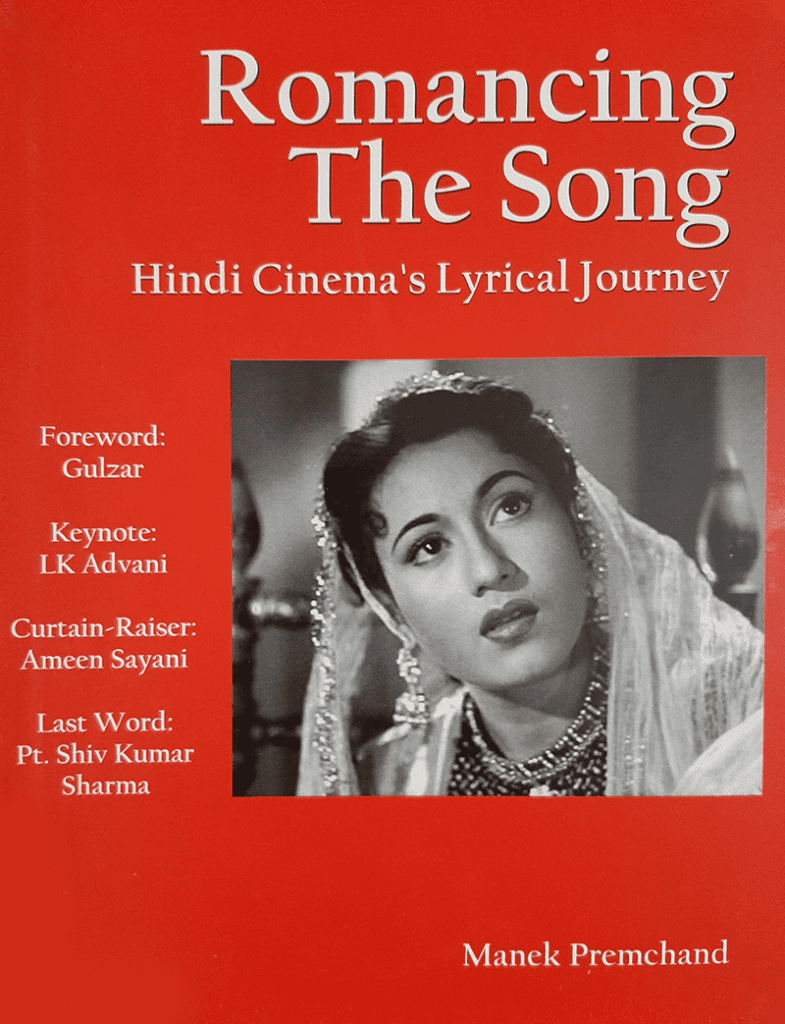
What makes a Hindi film song memorable? Is it the melody, the singer’s interpretation, the poetry, the situation in which the song appears, or the way all these elements come together?
Romancing The Song by Manek Premchand approaches Hindi film music through the song itself. Rather than focusing on a single composer or lyricist, the book invites readers to explore the Hindi film song as a form of musical and cinematic expression.
It examines songs in the context of the films and situations for which they were created, while also exploring their lyrics, meanings and poetic forms. Discussions of ghazals, nazms and rubaayis help readers appreciate the literary traditions that have influenced Hindi film music.
This approach is especially useful for listeners who know the songs well but want to understand more about their construction, meaning and place within Indian cinema. It encourages a closer engagement with the relationship between words, music, performance and storytelling.
Why read it? Choose this book if you want to explore classic Hindi film songs as works of poetry, music and storytelling, and understand what gives them their lasting appeal.
Book: Romancing The Song
Author: Manek Premchand
Why Read Books on the Golden Era of Hindi Music?
Listening to a classic Hindi film song can bring back a familiar voice, a film scene or a personal memory. Reading about the song can reveal the creative decisions, collaborations and cultural influences behind it.
A composer’s biography can help us understand how a distinctive musical style developed. A book on a lyricist can highlight the poetry and imagery in familiar lyrics. A study of a singer can reveal the qualities that made a voice so recognisable, while a book devoted to songs themselves can help us understand how music, words and cinematic storytelling work together.
These perspectives are especially valuable for anyone interested in the history of Hindi film music. They show how the songs that continue to be heard across generations emerged from a rich network of artistic contributions.
Books on classic Hindi film music also preserve stories, recollections, and details that might otherwise remain scattered across interviews, recordings, and personal memories. They give both long-time enthusiasts and new listeners a chance to discover the era with fresh ears.
Keep Listening, Keep Reading, Keep Discovering
The Golden Era of Hindi film music lives on through its songs, but the stories behind them deserve to be remembered and explored, too.
These six books offer different entry points into that history. You can follow the musical journey of Sachin Dev Burman, explore Majrooh Sultanpuri’s poetry, discover the breadth of O. P. Nayyar’s compositions, revisit Ravi’s musical legacy, learn about Hemant Kumar’s work across languages, or look more closely at the Hindi film song as a form of artistic expression.
Together, they offer a starting point for anyone looking for books on the Golden Era of Hindi music. There is much more to discover, and every book can lead to another composer, another voice, another lyricist or another song waiting to be heard differently.
If the music of this era has stayed with you, these books offer an invitation to explore its history, appreciate its creators and discover more of the stories behind the melodies.