
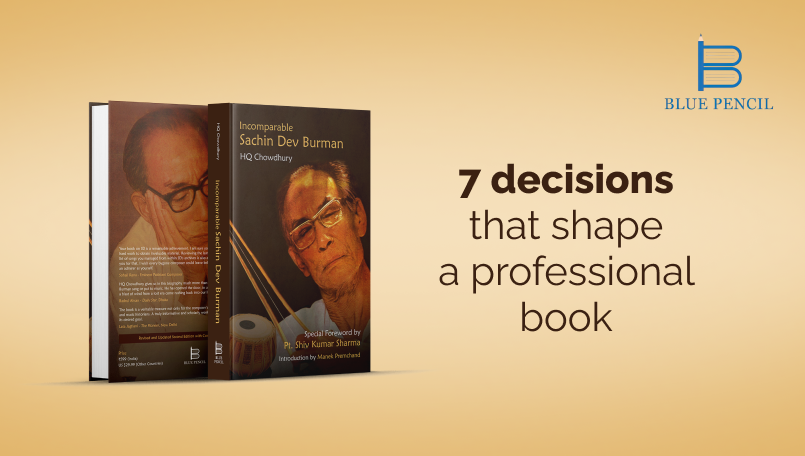
So, what makes a book look professional? The answer extends well beyond an attractive cover or a clean manuscript. Developmental editing, copy editing, proofreading, typography, book page layout, formatting, and visual design all influence the finished reading experience. Each stage addresses a different aspect of the book, and together they determine how polished the final publication feels.
Readers can often tell within the first few pages whether a book has been professionally produced. The writing feels polished, the typography is comfortable to read, the pages have a natural rhythm, and every element appears to belong exactly where it should. These impressions develop quickly because a professional book brings together many carefully considered decisions.
For authors preparing to publish their book, understanding these decisions that make a book look professional can help turn a completed manuscript into a finished book that readers can engage with comfortably and confidently.
1. The manuscript has a clear structure
Professional book production begins before the manuscript reaches the design stage. The structure must support the author’s ideas and give readers a clear path through the book.
For fiction, this can involve developing characters, pacing, plot progression, chapter structure, and continuity. For nonfiction, it may involve organizing arguments, sequencing chapters, reducing repetition, improving transitions, and strengthening the relationships between sections.
This is where developmental editing can make a substantial difference. A developmental editor looks at the manuscript as a whole and evaluates whether its structure, content, and purpose work together. The editor may identify sections that require expansion, chapters that need restructuring, or ideas that would benefit from a clearer progression.
Manuscript editing, therefore, begins with understanding what the book is trying to accomplish. A strong structural foundation makes the subsequent stages of editing and production much more effective.
How this contributes to a professional book
A well-structured manuscript gives every later decision a stronger foundation. When chapters, sections, and ideas relate logically, the finished book becomes easier to navigate and more satisfying to read.
2. The language has been carefully edited
Once the overall structure works, the manuscript needs attention at the sentence level. This stage focuses on clarity, consistency, grammar, punctuation, word choice, tone, and readability.
A copy editing service typically examines these details while preserving the author’s voice. The editor may refine awkward sentences, resolve inconsistencies, check terminology, and ensure that punctuation and style remain consistent throughout the manuscript.
Consistency matters particularly in longer books. A character’s name should follow one spelling throughout. Headings should follow a consistent style. Numbers, dates, capitalization, hyphenation, and references should follow an established editorial approach.
These details may seem small on their own. Across an entire book, however, they create a strong sense of editorial control.
At Blue Pencil, manuscript editing includes a careful examination of these elements so that the author’s voice remains recognizable while the text becomes clearer and more consistent.
3. Proofreading happens at the right stage
Editing and proofreading serve different purposes, and understanding the distinction helps authors plan the publishing process correctly.
Editing works on the quality and consistency of the manuscript. Proofreading provides a final quality check after the text has gone through the major editorial and formatting stages.
A proofreader may identify a missed typo, an incorrect page reference, inconsistent punctuation, a repeated word, or a formatting error that has appeared during production. The proofreader examines the actual pages as they will appear to the reader.
This timing is important. If an author makes substantial changes after proofreading, those changes can introduce new errors. Professional production, therefore, treats proofreading as a dedicated stage near the end of the workflow.
4. Typography is chosen for the reading experience
Typography quietly influences how readers experience a book. A typeface, font size, line spacing, and text width can affect reading comfort over hundreds of pages.
Book typography needs to suit the genre, content, and format. A literary novel may call for a traditional serif typeface with a restrained appearance, while a children’s book, poetry collection, or illustrated title may require a different typographic approach.
The designer also considers details such as:
- Typeface and font size
- Line spacing and paragraph spacing
- Text alignment
- Indentation
- Chapter headings
- Running heads and footers
- Page numbers
- Margins and text width
These choices work together. A font that looks attractive in a single paragraph may become tiring across an entire chapter if the size, spacing, or line length is unsuitable.
5. The book page layout gives every element its place
Book layout determines how the manuscript becomes a sequence of physical or digital pages. It includes much more than placing text inside a document.
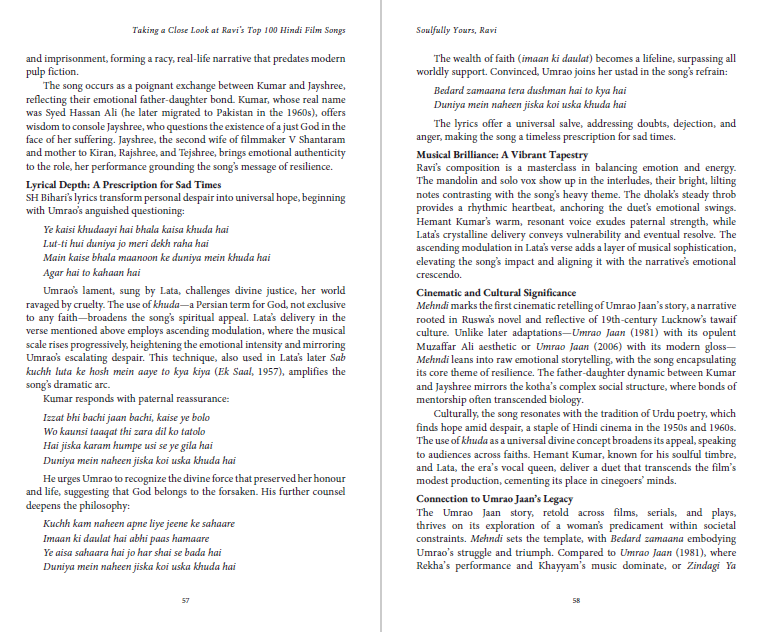
A professional book page layout considers the relationship between paragraphs, chapter openings, headings, illustrations, tables, captions, page numbers, and other elements. The designer also needs to account for the physical characteristics of the final book, including trim size, margins, binding requirements, and the publication’s reading direction.
For example, a chapter opening may require a different arrangement from an ordinary text page. A book containing photographs may need a layout that accommodates images without disrupting the surrounding text. A poetry collection may require considerably more attention to spacing and positioning than a conventional prose manuscript.
The aim is to create pages that feel balanced and intentional.

What does professional book layout involve?
Professional book layout typically involves establishing consistent page dimensions, margins, paragraph styles, heading hierarchies, page numbering, chapter openings, and placement of visual elements. The approach changes according to the book’s genre and content.
This is also where creative book layout design can become particularly important for illustrated books, art books, children’s books, poetry, and other visually driven publications.
Also read: Beyond Words: Why Book Illustrations Matter
6. Formatting creates consistency across the book
Formatting turns editorial and design decisions into a consistent production system.
For example, every chapter heading may use the same style. Every paragraph may follow the same typography and spacing rules. Page numbers may occupy consistent positions, while front matter and back matter follow the conventions appropriate to the publication.
Book formatting services prepare the interior for its intended format, whether that means a print-ready file or an appropriately structured digital edition.
A professional formatting process also considers technical requirements. Print books may require attention to trim size, margins, bleed, colour settings and the specifications of the chosen printer. Digital books require a different approach because text and page elements may behave differently across devices and screen sizes.
Formatting sits at the intersection of design and production. It translates the intended reading experience into a file that can function correctly in its final format.
7. The cover and interior create a coherent identity
The cover provides the first visual introduction to a book, while the interior carries that visual language through the reading experience.
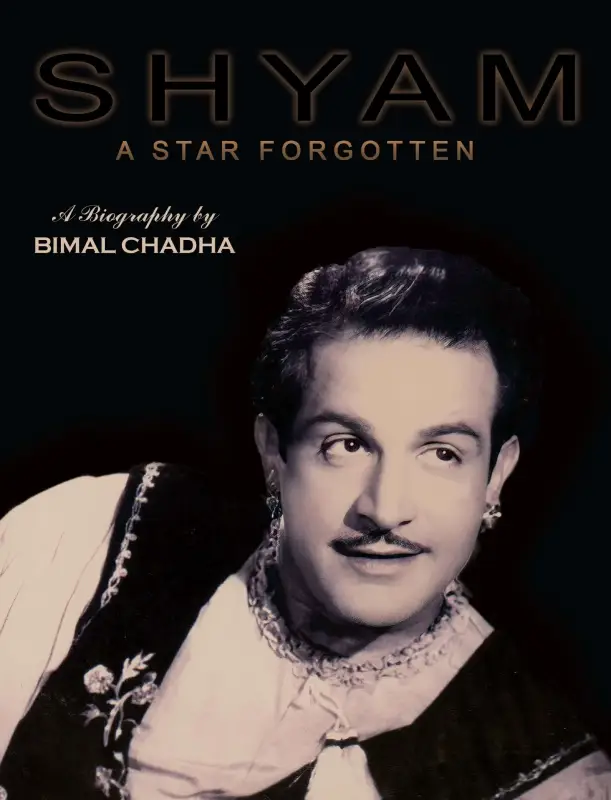
A strong book cover needs to communicate the book’s genre, subject, and tone while remaining legible at the sizes readers encounter online and in physical stores. The title and author name need clear hierarchy, and imagery and typography should work together.
The interior can then extend selected aspects of that identity through typography, chapter headings, section treatments and other design elements.
This does not mean every book needs an elaborate visual treatment. A restrained design can be highly effective when it suits the subject and audience. The important consideration is coherence: the cover, interior and content should give readers a consistent sense of what kind of book they are holding.
Professional book production is a series of connected decisions
The seven decisions above work together across the publishing process.
Developmental editing establishes a strong structure. Copy editing improves clarity and consistency. Proofreading provides a final check. Typography supports comfortable reading. Book page layout creates visual balance. Formatting prepares the interior for its final medium, and cover and interior design establish a coherent visual identity.
This is why a book can contain excellent writing and still feel unfinished. The manuscript quality represents only one part of the reader’s experience. Every stage that follows shapes how that writing reaches the reader.
For authors, this also explains why reviewing the finished book as a whole is valuable. A manuscript can look excellent in a word-processing document and change considerably once it becomes a designed publication.
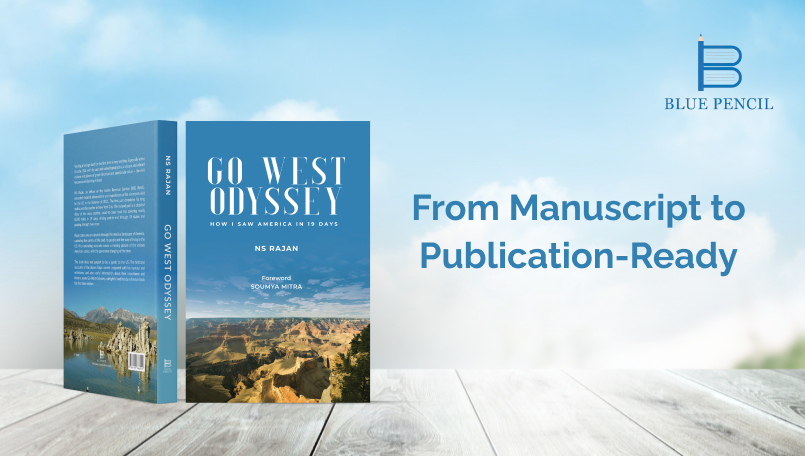
Read what N.S. Rajan, author of Go West Odyssey – How I Saw America in 19 Days, has to say about his experience of working with Blue Pencil.
How can authors tell if their book is professionally produced?
A useful way to evaluate a finished book is to step back from individual details and consider the overall experience.
Ask:
- Is the text easy to read for extended periods?
- Do chapters and sections follow a clear visual hierarchy?
- Does the typography suit the book’s genre and content?
- Are margins, spacing, and page elements consistent?
- Do illustrations, tables, or other visual elements sit naturally within the layout?
- Have the final pages been proofread after formatting?
- Does the cover communicate the book’s subject and audience clearly?
- Does the interior feel connected to the cover?
- Does the final file meet the technical requirements of its intended format?
Looking at the book through these questions can reveal production issues that may be difficult to spot when focusing only on the manuscript.
Amateur vs professional: what changes?
The difference often comes down to consistency, judgement and attention to detail.
| Area | Professional approach |
|---|---|
| Manuscript | Structure and content are reviewed according to the book’s purpose and genre |
| Copy editing | Language, grammar, punctuation, terminology and style are carefully checked |
| Proofreading | The final pages receive a dedicated quality check |
| Typography | Typefaces, size, spacing and hierarchy support comfortable reading |
| Book layout | Pages are designed around the content and final format |
| Formatting | Styles and production elements remain consistent throughout |
| Cover design | The cover communicates the book’s genre, subject, and identity |
| Overall production | Editorial and visual decisions work together as one coherent book |
The result does not need to look elaborate. Professionalism comes from making appropriate decisions consistently and applying them carefully.
When should an author bring in a professional?
Authors can handle some production tasks themselves, particularly when working with straightforward formats and familiar publishing tools. The decision to bring in professional support often depends on the manuscript’s complexity, the author’s experience, and the quality expected in the final publication.
A novel with a relatively simple interior may require a different production process from an illustrated children’s book, academic title, poetry collection, or photography book.
Professional support becomes particularly useful when several stages need to work together. At Blue Pencil, we work across these stages, including manuscript editing, proofreading, book layout, formatting, and cover design, allowing authors to approach book production as a connected process.
At Blue Pencil, we support authors throughout the publishing journey with book editing, proofreading, book layout, formatting, and cover design. Our approach brings editorial and production expertise together while keeping the author’s voice and vision at the centre of the process.
Have a manuscript ready for publication? Contact us to explore how we can help bring it to its finished form.
Frequently Asked Questions
1. How much does professional book production cost in India?
Professional book production costs vary according to the manuscript length, genre, level of editing required, design complexity, number of illustrations or tables, and whether the book is being prepared for print, digital publication, or both. Authors should request a project-specific estimate based on the actual manuscript and production requirements.
2. How long does it take to professionally prepare a book?
The timeline depends on the manuscript’s length and condition and the number of production stages involved. A book requiring developmental editing will generally take longer than a manuscript that only needs proofreading and formatting. Authors should also allow time for revisions, author approvals, and final checks.
3. Should an author edit a manuscript before sending it to an editor?
Authors benefit from completing their own revision before professional editing begins. A reasonably settled manuscript gives the editor a stable version to assess and reduces the likelihood of repeating major changes later.
4. What file format should an author submit for professional editing?
A word-processing file such as Microsoft Word is commonly suitable for editorial work because it allows editors to review and suggest changes efficiently. Requirements can vary by service and production workflow, so authors should confirm the preferred submission format before sending a manuscript.
5. Can the same book interior be used for print and ebook editions?
Print and ebook editions generally require different interior preparation. A print book uses a fixed page layout, while many ebooks use reflowable text that adapts to different screen sizes and reader settings. Preparing each edition according to its medium produces a more reliable reading experience.
Related Post:
Why Do You Need a Professional Editor?
The Power of a Second Pair of Eyes: Why Peer Reviews Aren’t Enough
The Psychology of Editing: Understanding the Reader’s Perspective