
Writing Short Stories

Of all forms of literature, the short story is perhaps the crest jewel of good writing. It is not too long and therefore ends before one’s attention is diverted to something else.

“A good short story is like a woman’s skirt. It should be long enough to conceal the essentials and short enough to draw attention to the details.”
– O Henry

Of all forms of literature, the short story is perhaps the crest jewel of good writing. It is not too long and therefore ends before one’s attention is diverted to something else.
It is also neither too short leaving the reader thirsting for more.

However, as every other form of writing, it should be absorbing, interesting and have an element of mystery in it. T S Elliot once said, “In my end is the beginning.” Herein is concealed a valuable tip for short story writers.

A short story should have a good beginning that not only sets the ground for the drama to unfold, but also has the seed of the final ending that the author has in mind within itself.
Yet surprisingly enough, every good ending that a short story has hangs in mystery. It ends and yet does not end and leads the reader into new avenues of thought and diverse layers of feelings.

As Rabindranath Tagore has so aptly said – a short story doesn’t end even when it ends.

The Beginning
Take care of the beginning and the story will take care of itself is an advice well worth heeding to. For example, O Henry’s short story “The Gift of the Magi” begins this way. “One dollar and eighty-seven cents. That was all.” The entire story revolves around true love against the dramatic setting of the financial crises of a couple who love each other intensely.

The fact that the lady of the story has only 1 dollar and 87 cents leads her to sell her most possession, her hair, to get enough money in order to buy a strap for the wrist-watch of her husband for Christmas.

It is very clear as the story progresses that she has struggled hard to collect the money and in the end, it is the inability to collect enough money to buy a gift that makes the protogonists of the story to give what they cherish most to procure the gifts each wants to give the other. It is a sacrifice of the highest order; one that communicates true love.

In other words the whole story revolve around the limited funds the couple have. But for this fiscal limitation, the story, “The Gift of the Magi” would not have any justifiable reason to be narrated. That gives us the cue. Note how a master short story writer like O Henry sets the start for a story and thus sets it on course to reach the surprise ending.

The Ending
Consider another one of O Henry’s stories — “The Last Leaf.” It begins with the protagonist of the story counting the falling leaves of an ivory creeper. The falling leaves are a metaphor for the fading signs of hope for the heroine of the story. Because she is a failure as an artist thus far in life, she considers herself a total faliure.

In the end, the stubborn will of a leaf refusing to fall from the creeper makes her gain hope and confidence and she recovers from her terminal illness. The illness, infact is a mask — the real disease is her psychological depression.

She identifies herself with the leaf, each one when it falls snaps something in her. But then comes one leaf that refuses to drop off. That is enough to lift her spirits. The reader is left wondering what falling leaves means to her and how it changes her attitude towards life.

It also provokes us to think. Are we also counting our days like the protagonist in the story or are we steadfastly clinging like the last leaf to the tree of life?
The ‘Open Ended Story’

In an open-ended story or narrative, the reader is left to draw her/his conclusions from what is presented to her/him.

By Learning & Creativity Team

 
Traditional short stories have a catchy start, a fluid free-flowing middle and a satisfying end. However, many modern writers find that such stories have the drawback of not being able to communicate the complexities they want to unravel.

They evolved a new style of story telling, the ‘open-ended narrative’ in which the conclusions are not clearly stated. The reader is left to resolve the situation with her/his imagination. The writer simply presents before the reader a sequence of events. Nothing more.

Open ended stories are primarily of two types: situational and character-based.

Situational-based open ended short story

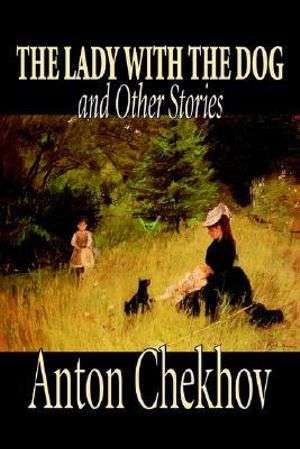
Probably, one of the best example of a situational-based open ended story is Anton Chekov, the well-known Russian writer’s “The Lady with the Dog”. The two central characters in this story, strangers at the beginning, fall in love with each other when on separate vacations.
Dianabol bodybuilding price, steroid effects women – shale-world the most common mistakes when taking steroids training with a weight bench – the declic fitness blog.
With the vacation over, the two, there is a big difference in their age and social status, return to their respective homes. Incidentally, both are married and the man have children of the same age as the woman with whom he has fallen in love.

The man can’t forget her and goes in search for her. When he finds her, he discovers that she too cannot forget him. They resume their affair, though not letting others, especially their respective families know about it.

Chekov’s ending is open-ended. When it seems that the two are very close to a decision, in their heart they know that the end was very far away.

Hence, in such a story, there are no definite conclusions and it is left to the reader to draw one’s own conclusion. The situation remains unresolved because of events or circumstances.

Read the short story Wrong Picture to illustrate the example of a situational-based open-ended story.

Character-based open-ended short story

In an open-ended story or narrative, the reader is left to draw her/his conclusions from what is presented to her/him. Basically in character-based open-ended story lacks a clear-cut ending that follows from the nature(s) of the protagonists.

Take for instance a story, “My Enemy” by the well-known Hindi short story writer, Krishna Baldev Ved.
The narrator in this story runs into an old friend. They had been out of touch for long. The two are placed in different situations. The narrator is a married man and respectable. The friend on the other hand is derelict.

Despite the distance that has grown between the two, the man moves into to the narrator’s house. After this a series of incidents follow. Then the narrator’s wife, Mala, moves out of the house with her children. She threatens not to return till the friend is thrown out.

Five days passed after the narrator’s family had left. He now sits and contemplates the options available. He tells himself that if his wife were there, she would definitely come up with some alternative. However, she was not there and hence did not know what to do. It is on this note of self-realization that the story ends.

In this example of character-based open-ended narrative, the reader is definitely perplexed as to how the turmoil in the narrator’s mind was resolved. However, the reader is left free to make guesses from what has been revealed of the narrator’s personality.

Choices Before an Aspiring Writer

Write to please yourself. And find as much pleasure as you can in the company of your work. But don’t try to draw others’ attention to your work. They shall find nothing in your work to sustain their interest.

By Shravani Dang

 
Some are born to write; some learn to write; others write to please themselves.

People who write to please themselves

Those who write to please themselves should stop at that. They can revel in the company of their work. They can read them, over and over again, and have all the fun they seek. It is their work. They can look upon the work as perfect in every way.

In fact, it is perfect, from their viewpoint. They can find no flaw in their work. Rightly has it been said, “For the crow, its young one is the most beautiful of nestling in the world.” It is when they try to take to a wider audience, to impress others that they run into trouble.

Those who are clever diplomatically avoid a judgement of the work, say that they are not equipped to judge real literary merit. “You must show it to a critic and find his response,” they suggest. This is an advice that those who write to please themselves must avoid like plague.

The critic shall tear their work to pieces. He shall shower scorn and ridicule on the authors of work that strike him as puerile. Why take this risk? Why go out of one’s way to become the target of explosive remarks and derisive comments!

So our advice to this set of people is quite clear. Write to please yourself. And find as much pleasure as you can in the company of your work. But don’t try to draw others’ attention to your work. They shall find nothing in your work to sustain their interest.

People who learn to write

They have a good command of the language. They know the subtle nuances of words. They know the difference between lightning and lightning bug. They know where the word COMPLEMENTARY is to be used; and where the word COMPLIMNETARY. They also know that words limit their equipment. They are aware of a limitation. They know that their imagination rarely soars free. That is their tragedy.

It takes them time to realize this fact. But the quicker they sense their inherent limitation, the better it is for them. For they then learn to write informative articles, insights, editorials, features etc for the Press. They learn how to manage books around a defined topic.

They write well. They write incisively. Over a period of time, their expression becomes smooth, flowing, relevant, pertinent and hence of immense appeal to the readers.

They have a role to play. And so long as they serve this role, nobody can find fault with them. In fact some of them gain a fair amount of readership following too.

But great literature is not theirs to create. That belongs to those who are born to write.

People who are born to write

They do not go about asking others how to write. They do not wait for formal courses in creative writing. It is the belief of those who have found niches for themselves in the world of literature that the ability to write great literature is a gift of the Gods. This gift cannot be bought; nor commanded. One either has it; or doesn’t have it.

Those who have it are dreamers. They live in a make believe world. They are impractical, unsuited to work at home finances; or to run a business; or to work at an establishment. Some try to do that, but fail.For their mind is not on the job. It is elsewhere. It is constantly being blown around by the creative force.

This force is a powerful slave driver. It looks upon those who are born to write as slaves who shall do nothing else but write. The creative process overrules all else. Those who are born to write thus expose themselves to all sorts of troubles. They starve, their personal relations end up in disasters; their children become vagabonds, their finances hit the rocks, their personal reputations plunge. But these are the fiery ordeal through which the creative minds have to pass to purify their thoughts and to filter out the finest of literary products.

So every young aspirant must, before he chooses literature as a career, must ask himself the following questions. He must answer them honestly.

1. Do I enjoy anything else as much as writing?
2. Am I ready to face the pains and the perils which go with the career?
3. Shall I survive the worst of criticism if my writing is ahead of the
time and the critics lack the skill to judge my merit?
4. Shall I write for money and the comforts and the luxuries that go with it?
5. Shall I remain true to the Muse, all through life?

Try these questions. Seek the answers by plumbing into your very being. Be honest to yourself.

Till next time, then.

(This article was first published in Meghdutam.com (between 1999 to 2003) and is now extracted from Learning and Creativity.)

Building a Story

A short story is a bit like a giant jigsaw puzzle where each piece is put together by the writer and given as a complete whole to the reader.

By Shravani Dang

 
Stories can be found everywhere — in a joke, an event, relationships, and even imaginary ones. A thread runs through all along the story holding each piece together. A story is a bit like a giant jigsaw puzzle where each piece is put together by the writer and given as a complete whole to the reader.

The reader eagerly waits for the next piece to fall in place to get to the end of the story. The many twists and turns the story takes is what is exciting and keeps the writers’ as well as the readers’ interest.

Among the many theories about good writing skills, one that is hoary but tried and tested is the powerful equation of the 5W’s and 1H. Like all mathematical equations, this too is fairly easy if you can crack it.

Once cracked this becomes part and parcel of writing and the mind focuses on it automatically as this is basically the very essence of communication. The equation then is very simple, the 5W’s are Who, When, Where, What and Why. The solitary H refers to How. A good example of this equation is the newspaper.

Every newspaper story answers each question. If you analyze newspaper stories you will find this out for yourself. Newspapers have the name of the place, the date, the persons involved and the story clearly defined. All stories are about Who, When and Where. Who refers to the characters that are present in your story. Just like a film or a drama, every story has a set of characters who with their individual mix of personalities bring out the story. For example, in the simplest of stories, some characters are villains and the others are the good guys.

While others and in more complicated stories somebody may be repressed human being, another a mad scientist, a third an incurable romantic while a fourth could be a squeaky clean holier-than-thou prissy. Characters make up stories. It is up to the author to give them the hues that is needed for building the story.

When may mean time like “a long, long time ago”, or even “once upon a time” or even “last year”, “last night” or “early in the morning”. Where could be in your dreams, in your house, towns, countries, cities, places like Connaught Place in New Delhi.

Keeping the equation in mind you could write a story based in Ballygunge in Calcutta which took place during Durga Puja and involved the local gunda called Khokon, the frail but honest widow called Lakshmi Didi and the extortion racket.

The best way to answer and tackle these is to think about it first. Then decide on how, who, when and where to fit into your story, then all you have to do is to write it.

Adventure, mystery stories including thrillers are normally called Whodunit meaning who did it. Here the answer to this question is the most important part of the story. Like a story on the “The Neighbourhood Thief”, all the readers are keen to know who the thief is.

The next step in building a story is to endeavor to answer the next lot of questions of the formula.

(This article was first published in Meghdutam.com (between 1999 to 2003) and is now extracted from Learning and Creativity