


All
- All
- Books
- Authors
- Events & Book Fairs
- Blog posts
Blue Pencil
B-19, Acharya Niketan
Mayur Vihar Phase 1
Delhi - 110091
95828 49600
hello@bluepencilpublishers.com
Kolkata Partner
Virasat Art Publication
70036 24823
connect@vapublication.com
B-19, Acharya Niketan
Mayur Vihar Phase 1
Delhi - 110091
95828 49600
hello@bluepencilpublishers.com
Virasat Art Publication
70036 24823
connect@vapublication.com
$20.99 Original price was: $20.99.$18.99Current price is: $18.99.
Temporarily out of stock
Out of stock

FREE Delivery anywhere in India
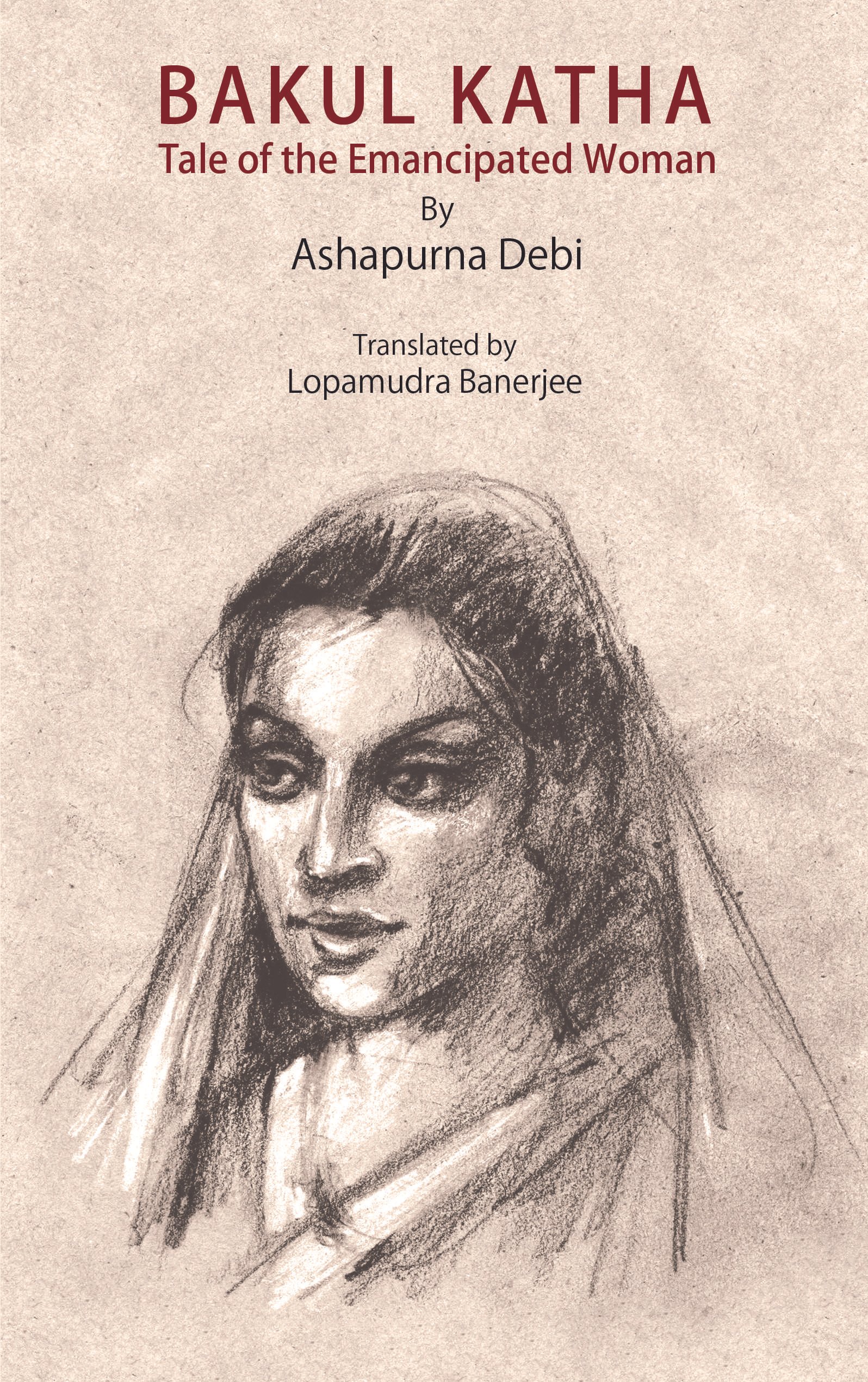
A journey finds closure, the journey of Subarnalata’s progeny and successor Bakul who questions the outcome of the newfound emancipation of women in a new, liberated Bengal, who censures her successors silently for ignoring the thin line between a woman’s freedom, her empowerment and anarchy, a terrible outburst when freedom gives birth to decadence.
$15.99 Original price was: $15.99.$13.99Current price is: $13.99.

$15.99 Original price was: $15.99.$13.99Current price is: $13.99.

$18.99 Original price was: $18.99.$14.99Current price is: $14.99.
ISBN: 978-93-90873-57-9
Published: 24 June 2021
Pages: 337
Binding: Paperback
Published by: Avenel Press
A journey finds closure, the journey of Subarnalata’s progeny and successor Bakul who questions the outcome of the newfound emancipation of women in a new, liberated Bengal, who censures her successors silently for ignoring the thin line between a woman’s freedom, her empowerment and anarchy, a terrible outburst when freedom gives birth to decadence. A journey where she searches for the meaning and resonance of love in the most unexpected places, while burning in a fire of her own making.
Ashapurna Debi (8 January 1909 – 13 July 1995 was a prominent Bengali novelist and poet. She has been widely honoured with a number of prizes and awards. In 1976, she was awarded Jnanpith Award and the Padma Shri by the Government of India; D.Litt. by the Universities of Jabalpur, Rabindra Bharati, Burdwan and Jadavpur. Vishwa Bharati University honoured her with Deshikottama in 1989. For her contribution as a novelist and short story writer, the Sahitya Akademi conferred its highest honour, the Sahitya Akademi Fellowship, in 1994. She has been a prolific novelist and short story writer all throughout her life and has written one thousand five hundred short stories and almost two hundred and fifty full-length novels and novellas in her lifetime. She has been considered as the doyenne of Bengali literature in the post Rabindranath and Saratchandra era. Her rich and extensive repertoire consists of 37 collections of short stories and 62 books for children.
Ashapurna Devi’s trilogy- Pratham Pratisruti, Subarnalata and Bakul Katha – is often regarded as her magnum opus. In the post-Tagorean period of Bengali literature, Ashapurna Devi emerged as the first woman writer who addressed the oppression, exploitation and marginalization of women in middle-class rural and even urban Bengali society.
Lopamudra Banerjee has translated Bakul Katha, the third volume of the stellar trilogy into the English language, for the very first time, that is almost 57 years after the novel was first published in Bengali in 1974. I am confident that the English translation of Bakul Katha will be well received by readers, both at home and in the world, specifically by those who are unable to read the Bengali language.
Banerjee’s translation, will surely open up new windows of perception about the evolution of the patriarchal society in Bengal through the representation of educated and cultured Bengali women of the 20th century. If there is some dilemma in Ashapurna Devi’s support of women’s liberation and equal rights for women in Bakul Katha, unlike in her two previous volumes, this indeterminism will inevitably trigger further critical interest of researchers, feminist scholars and students of gender studies. A translator’s engagement with the text to be translated is not just labour of love, it is about bringing together in an immersive mode, the source text and the target text in a felicitous bonding. Lopamudra Banerjee in her translated/transcreated text has been able to achieve just that union, seamlessly.


Reviews
There are no reviews yet.